
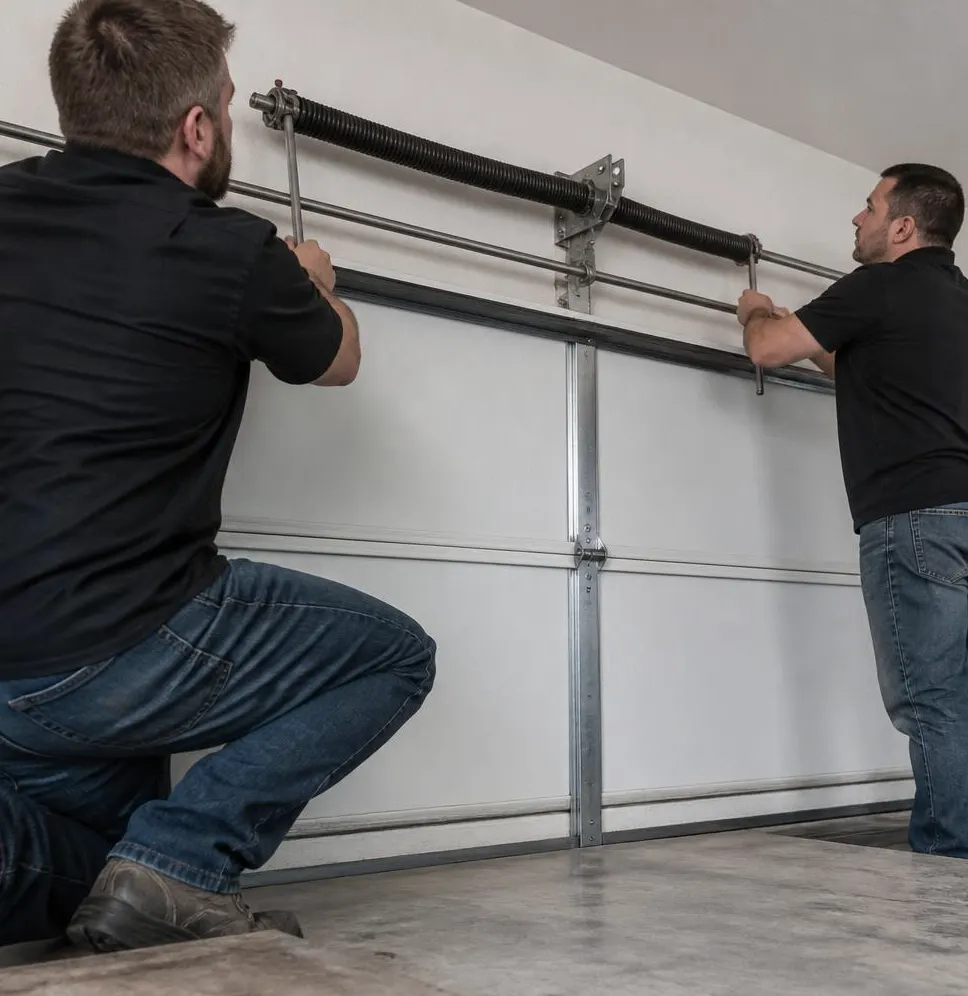
The Fix Most People Try First
The first thing most homeowners do when they notice a bent garage door track is grab a hammer, a rubber mallet, or a pair of pliers and try to knock it back into shape. It's an understandable reaction. The bend is right there in front of you, the metal looks like it should just pop back into line, and it feels like a five-minute job anyone could handle. The problem is that a garage door track isn't decorative trim — it's a load-bearing guide rail holding up a door that weighs far more than it looks, while cables and springs underneath are under real tension. Hand-bending a track that's already out of alignment can shift it just enough that a roller jumps the rail mid-cycle, or that a cable slips off its drum. What started as a cosmetic dent can turn into a door hanging crooked, or a door that won't move at all. Before touching anything, it helps to know what the symptoms are actually telling you.
Signs the Tracks Are Bent or Misaligned
- The door hesitates, jerks, or shudders at the same spot every time it opens or closes
- One side of the door visibly lags behind the other, so the door travels crooked instead of level
- A roller looks like it's riding the edge of the track instead of sitting centered in the channel, or you can see daylight between a roller and the rail
- Grinding or scraping metal noise that happens at the same point in the cycle, not just once
- The opener strains, hums, or reverses partway through a cycle because the system reads the resistance as an obstruction
- Visible gaps, dents, or spots where a track pulls away from its wall bracket
What a Technician Checks, and in What Order
1. The track itself, top to bottom
The first step is a visual and level check along the full length of the track, looking for where it bows, dents, or narrows. A slight warp caught early can sometimes be reshaped with the right track pliers and a level to confirm it's running straight again. A deeper bend usually isn't worth reshaping — steel that's already been forced out of shape once tends to bend more easily the second time, so replacing that section is the more durable fix.
2. Mounting brackets and fasteners
Loose lag screws are one of the most common culprits, especially on homes that go through the kind of seasonal swings we get here, where humid summers swell the wood jamb and cold, dry winters shrink it back. Add road salt and ice exposure to the mix and hardware corrodes faster than people expect. A technician checks every bracket along the track for play, re-torques what's loose, and replaces screws that are rusted or stripped — sometimes relocating the anchor point if the jamb wood itself has degraded.
3. Signs of an impact
Before assuming wear and tear, it's worth ruling out a direct hit. A bumper misjudged on an icy driveway, a ladder leaned against the wrong spot, or a chunk of ice sliding off the roofline onto the track below are all common causes locally. An impact often damages more than just the track — the bracket and the door panel near that spot should be checked too.
4. Roller condition
Worn, cracked, or flat-spotted rollers don't travel smoothly, and they chew at the edge of the track every time the door cycles, which can be what's actually widening a gap that looked like a track problem. Older steel rollers are especially prone to this. The fix is usually replacing them with nylon rollers, which run quieter and don't gouge the rail the way worn steel wheels do.
5. The door panel itself
Sometimes the track isn't the real problem — a warped or bowed panel is pushing against it from the inside. This shows up most on older steel doors that have taken a hit at some point. Checking the panel's straightness separately from the track tells a technician whether the fix is a track adjustment or a panel section replacement.
6. Track plumb and spacing
Finally, the vertical tracks get checked for plumb and the horizontal spacing is measured against the door's actual width. Garages settle over the years, and in older homes that shift can gradually pull tracks out of their correct spacing without any single dramatic event causing it. The fix here is resetting the track position and adding or replacing brackets so the spacing matches spec again, rather than trying to force the existing track to compensate.
When to Call Medina Door & Opener
If your door is hesitating, grinding, or running crooked, stop using the opener and call before the damage spreads to the cables or rollers. For track issues specifically, our Cable & Track Repair service covers everything from re-leveling a slightly bent section to replacing damaged track and hardware outright, and we'll check roller condition and bracket security at the same time rather than treating the symptom in isolation. If the tracks have been limping along for a while, a Garage Door Maintenance visit is a good way to catch loose brackets, worn rollers, and early misalignment before an Ohio winter's ice and salt make the fasteners worse.
If your garage door in Medina, Brunswick, Wadsworth, or anywhere nearby is jerking, grinding, or running crooked, give Medina Door & Opener a call before it turns into a bigger repair.